Our aim is to help stabilise your knee again, restoring strength, confidence and stability so you can return to the activities that matter most to you.
ACL and meniscus repair
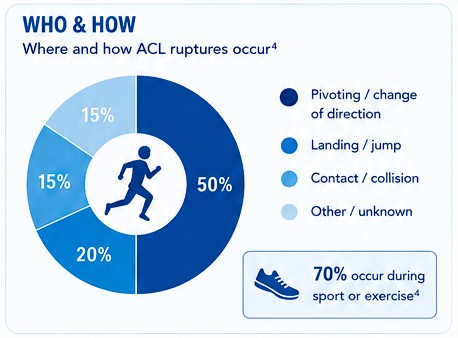
A torn ACL (anterior cruciate ligament) or meniscus ligament are one of the most common knee injuries, especially affecting active people who play sports.
ACL reconstruction surgery is a procedure to repair or replace a torn or damaged ACL in your knee. The ACL is one of the major ligaments in the knee, responsible for providing stability and control during activities such as walking, running, and jumping. When it is torn, it can result in instability, pain, and limited function in the knee.
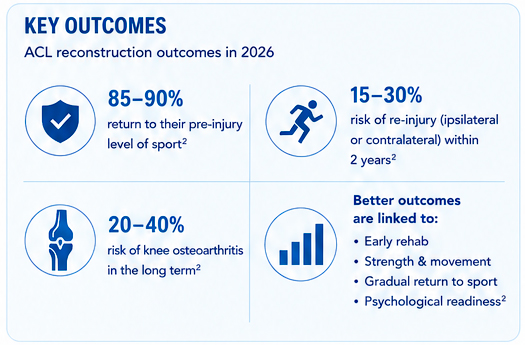
Fast Facts: / Surgery time 60 minutes average / One overnight stay in hospital / 85%+ return to pre-injury sport level
Our Anterior Cruciate Ligament Repair Process
Meniscus Repair
Arthroscopic meniscus repair is a minimally invasive keyhole surgery used to fix a torn meniscus — the C-shaped cartilage that cushions and stabilises the knee.
Rather than opening the knee joint, the procedure is performed through a series of small incisions using a specialised camera (arthroscope), allowing for precise repair with less trauma to the surrounding tissue, reduced pain, and a faster return to daily activity.
Expand to read more about Meniscus Repair
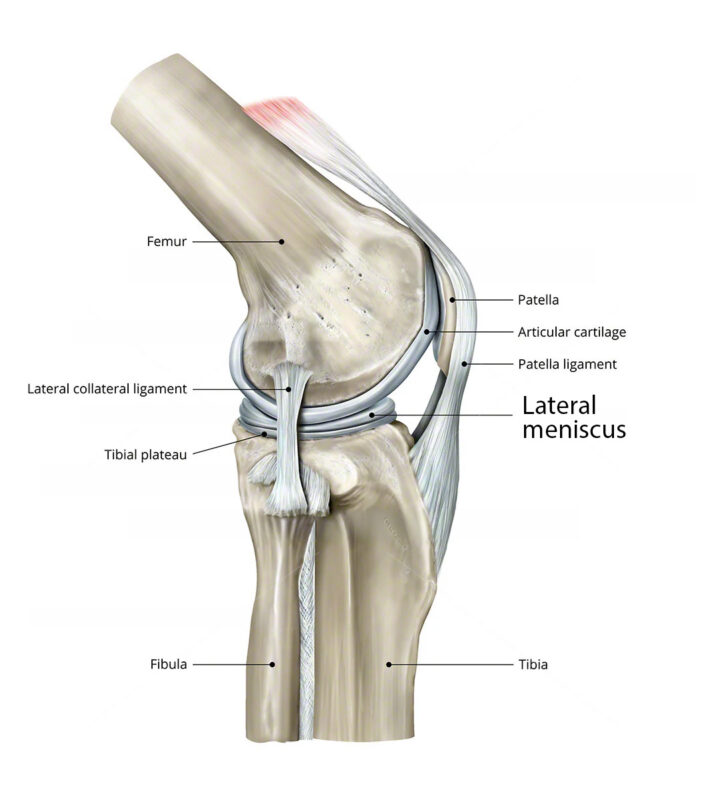
The meniscus is a C-shaped piece of cartilage in the knee that acts as a natural shock absorber, sitting between the thigh bone (femur) and shin bone (tibia). It cushions the joint, protects the bone surfaces from wear, and plays a key role in knee stability. By helping to distribute weight evenly across the joint, the meniscus allows for smooth, controlled movement — whether you’re walking, running, or pivoting during sport.
Most of the meniscus lacks its own blood supply, which is what makes meniscal repair a technically challenging procedure. That said, current surgical techniques have significantly improved repair success rates, making meniscal preservation increasingly achievable — offering patients better long-term knee function and longevity.
Repair via Arthroscopy
Once the tear is clearly visualised, the torn edges of the meniscus are carefully prepared and brought back together using sutures or specialised fixation devices. The specific technique depends on the tear’s location, shape, and the quality of the surrounding tissue.
Where possible, preserving the meniscus rather than removing torn tissue is the preferred approach — the meniscus plays a vital role in long-term knee health, and repairing it helps protect the joint from premature wear and future arthritis.
ACL Graft
A graft from your hamstring tendon is used to replace your torn ACL.
Expand to read more about Hamstring Graft
Hamstring Graft ACL reconstructions are the most common type of ACL reconstruction performed around the world today.
In this method, one or two of your hamstring tendons (usually semi-tendinosus and/or gracilis) are harvested from your leg and fashioned into an ACL graft using stitches.
This method of ACL reconstruction has become very popular due to the availability of the tendon, and the low rate of complication with hamstring harvest post-operatively.
Still, occasionally some patients can get some pain in the back of the thigh post-operatively and it’s important not to be too aggressive with hamstring exercises in the early post-operative period. The tendons from where the graft was harvested do heal, and result in minimal weakness.
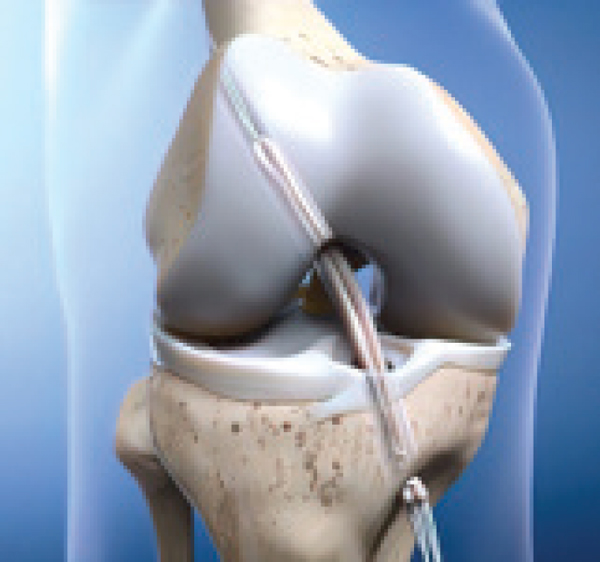
Small tunnels are created in the bone to secure the graft which is then fixed in place with a carbon fibre screw and staple into your tibia to ensure stability.
We close your incisions with sutures, a waterproof dressing, and a compression bandage to help reduce swelling.
Arthroscope for ACL or Meniscus Repair
We use three small incisions either side of your knee to access the joint.
An arthroscope (tiny camera) is inserted through one of the incisions to allow Dan to see inside your knee, which means it is a very non-invasive surgical operation.
Using the arthroscope, we can also repair any damaged meniscus.
0
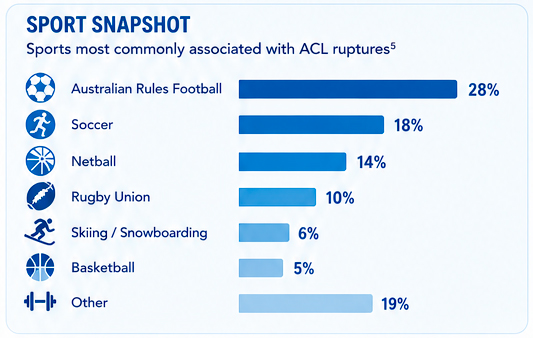
ACL ruptures in Australia in 2026 ~ 80 per day
0%
Increase in ACL Ruptures over the past 5 years (2021-2026)
0+
ACL reconstruction surgery performed in Australia in 2026 ~ 50 per day
0x
Males are 2.3 times more likely than Females to rupture their ACL
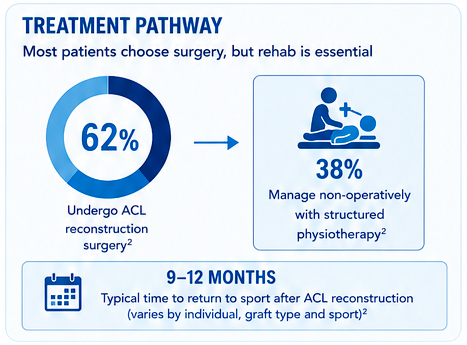
Remember that ACL surgery is generally successful in restoring knee stability and function, but the specific details and recovery timeline may vary depending on individual factors. A successful surgical outcome can be aided by strengthening your knee muscles in the lead up to surgery, keeping active, and maintaining a healthy body weight.
"Having ACL surgery is a big decision. Please ask us anything at any stage of your journey. Our team has many years of experience in orthopaedic care and we'll be with you every step of the way."
“My goal is to offer a tailor-made solution that’s right for you, so you can get back to doing the things you love.”
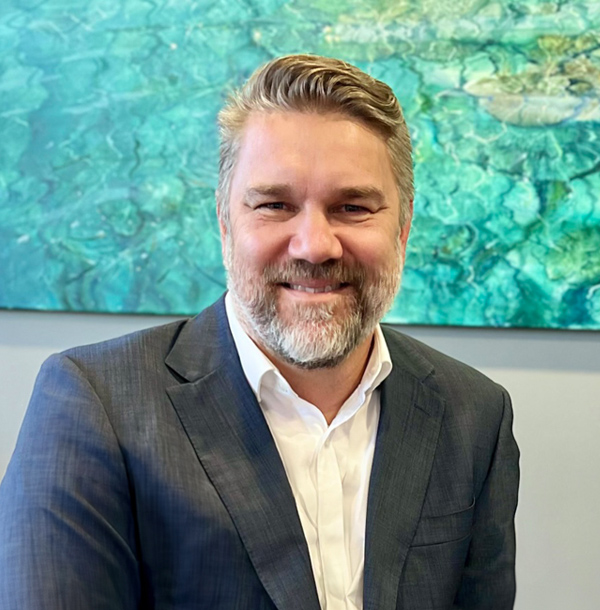
Dan graduated with Honours from the University of Western Australia in 1997 and completed his training at the Sir Charles Gairdner Hospital in Perth. This was followed by an international fellowship at the Royal Bournemouth Hospital in the UK. Dan’s extensive clinical experience means he can draw on all aspects of orthopaedic surgery to offer the best option to address each patient’s specific needs. With a successful academic career investigating innovation in implant and equipment design, Dan ensures his patients benefit from the most up-to-date and effective techniques available. He believes a team approach is the best approach to help solve problems and is involved in ongoing research to improve patient outcomes.
Penny Scott
Clinical Nurse Specialist
“I love looking after people and I’m here to address any concerns, offer practical advice and support you every step of the way.”
Penny is a clinical nurse specialist with more than 20 years of experience in the operating theatre, and has worked with Dan since 2010. She has a particular interest in orthopaedic surgery, and has recently expanded her repertoire by working alongside Dan outside of the theatre environment, looking after patients pre- and post-operatively.
Penny completed her Bachelor of Nursing (BN) Degree in Christchurch, New Zealand, before moving to Australia in 2006.
Joanna Gregg
Patient Journey Partner
“I’m involved at all stages of your treatment plan. Don’t be afraid to ask me anything – no question is wrong, as far as I’m concerned.”
Joanna provides administrative support for Dan’s practice and is your key point of contact through your treatment plan. With a background in public health and health promotion, she is passionate about empowering patients to get the most out of their healthcare experience. Joanna works closely with the clinical team to ensure you are supported at every stage of your joint surgery journey.
Kristen Clarke
Physiotherapist Co-ordinator
“I love the clear benefits of physiotherapy to a patient’s life – and I’m here to make sure your program is right for you.”
Kristen has spent the past seven years focusing on pre- and post-op orthopaedic care. She has worked in both private hospitals and private practice settings and brings a wide range of expertise and experience to her role.
Kristen strongly believes that there is much more that physiotherapy can offer to orthopaedic patients to improve their quality of life and she is excited to assist our patients on their joint replacement journeys.